TECHNOLOGY
Reliability by design for hydroponics automation.
MakersHydro® technology choices focus on reliable pH control, EC monitoring, nutrient dosing and local-first indoor grow automation where measurement quality and long-term reliability matter.
Atlas Scientific EZO™

MakersHydro® pH Node uses Atlas Scientific EZO™ measurement technology as part of an isolated measurement architecture.
Atlas Scientific EZO™ was selected for its documented accuracy, extensive documentation and proven use in research, laboratory and industrial automation applications.
MakersHydro® combines Atlas Scientific EZO™ technology with a distributed CAN architecture, isolated measurement design and local-first control logic designed for real growing environments.
Explore Atlas Scientific EZO™ →Local-first control
Critical measurement, dosing and safety functions are designed to operate locally. Internet connectivity can extend the system, but it is not required for core hydroponics control.
Local control allows dosing, measurement and safety functions to continue operating even if internet connectivity, cloud services or remote access are unavailable.
Remote monitoring is optional. Core growing functions remain inside the local control network.
Read the pH/EC control philosophy →Safer equipment integration
MakersHydro® keeps critical decisions in the local low-voltage control architecture and can use suitable plug-in equipment-control devices where applicable.
The goal is to reduce the need for user-built mains relay wiring near water, humidity, pumps and grow lights — without claiming that any integration removes the need for proper electrical safety practices.
Read the safety approach →Component quality
High-quality components are not an add-on. They are a design principle. MakersHydro® prioritises reliable measurement circuits, robust connectors, isolated measurement domains and serviceable hardware architecture.
Component selection focuses on long-term reliability, measurement integrity and maintainability rather than minimum component cost.
Distributed CAN architecture
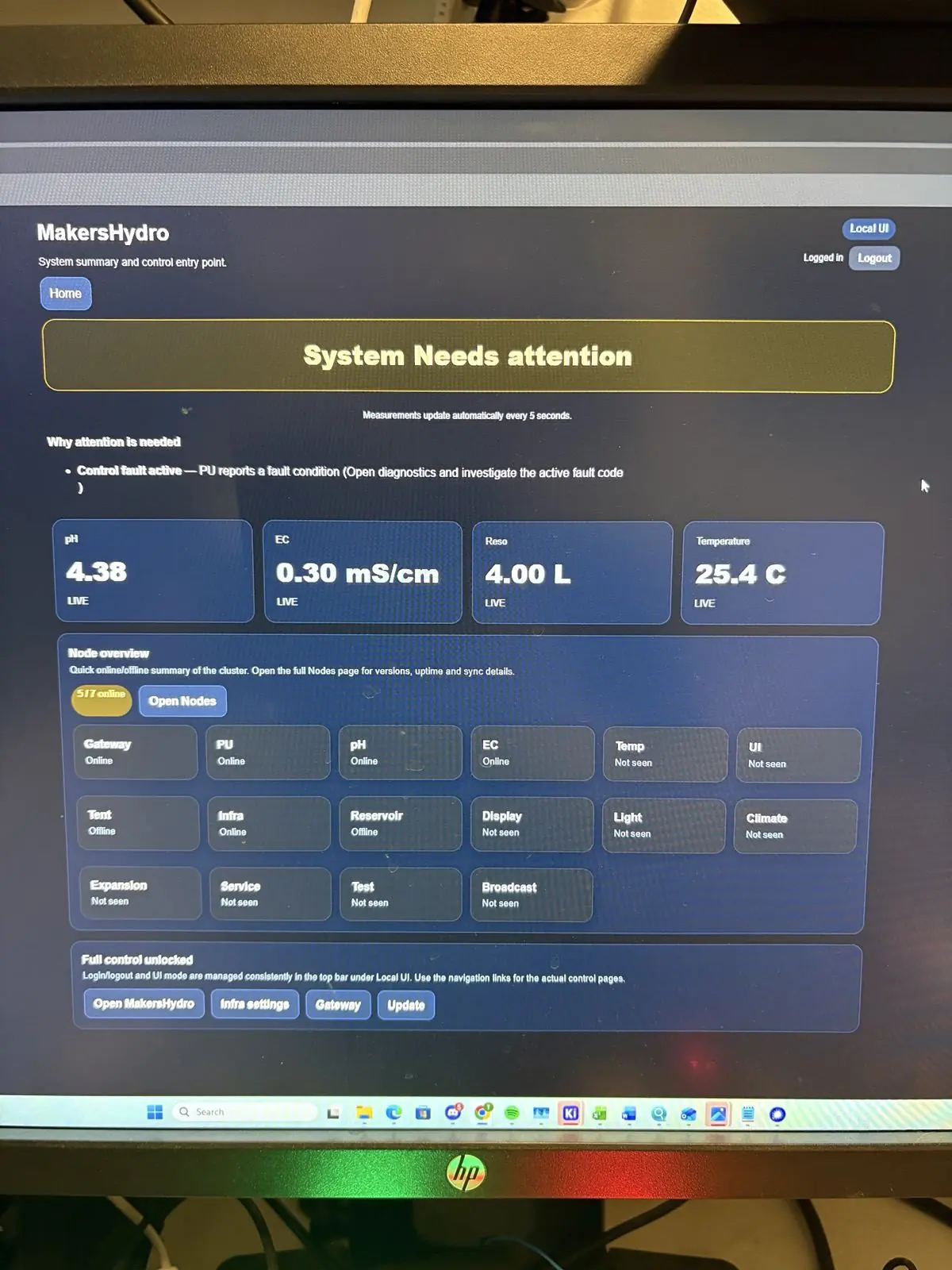
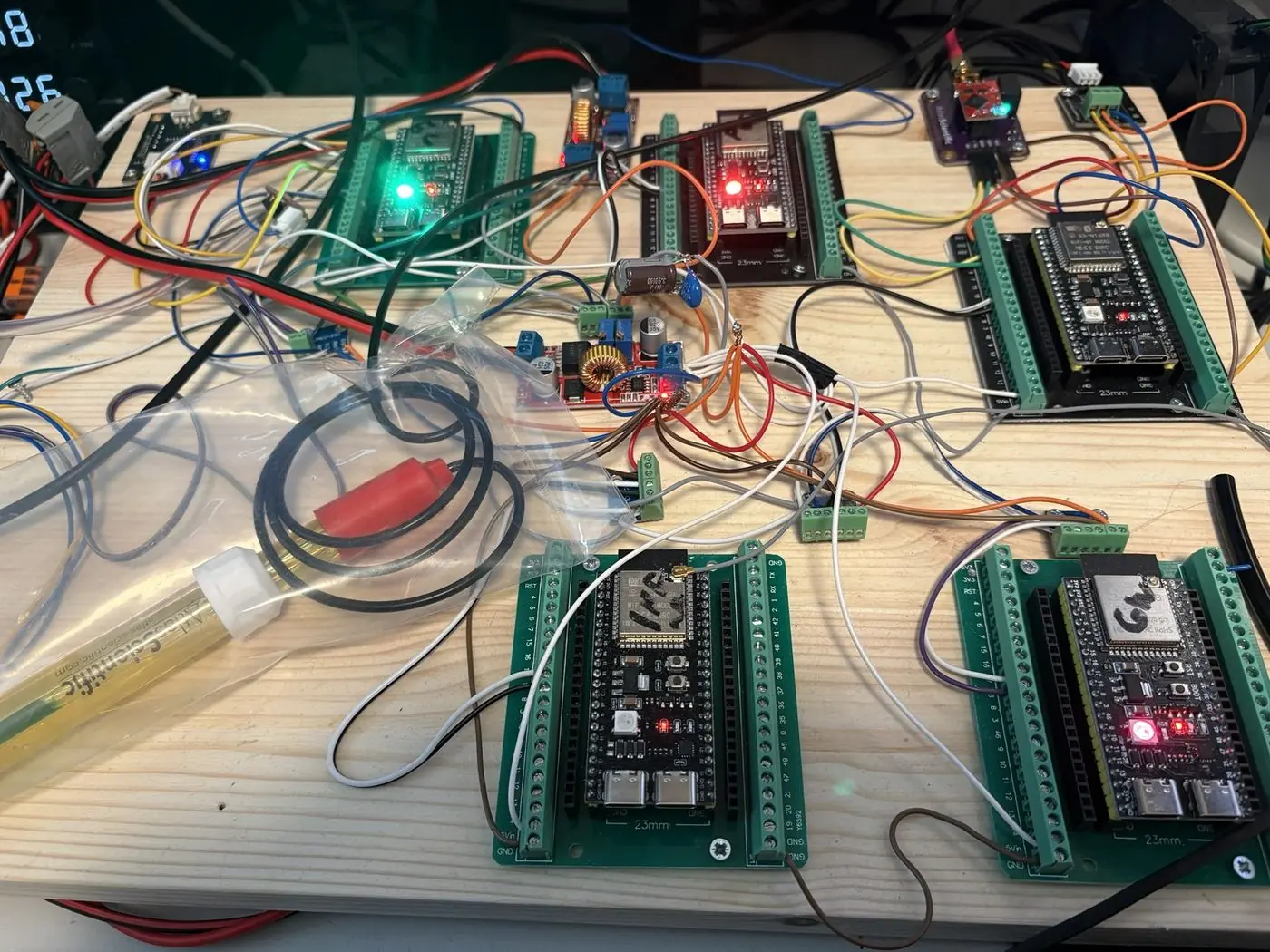
Measurement, dosing, reservoir and infrastructure functions are separated into serviceable nodes connected by a wired CAN bus. The architecture is built for maintainable hydroponics automation rather than a single fragile control box. Each node has a clearly defined responsibility, allowing the system to scale and remain maintainable as new functions are added.